Bingo at the Back of the Shop: A Cheekie Guide to £2 Charity-Shop Jackpots
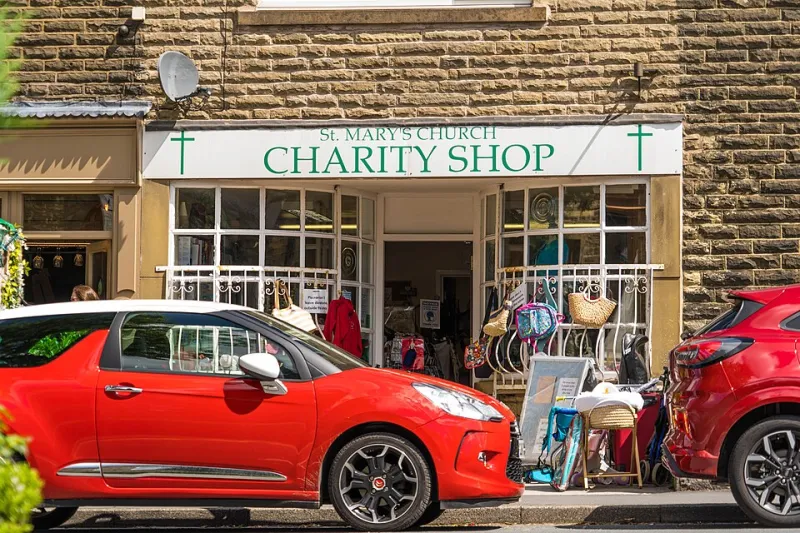
Photo: Claireneon, CC BY-SA 4.0, via Wikimedia Commons
Charity shops are the last great British adventure. You go in for a quick look and come out with a lemon squeezer, a paperback about llamas and a jumper that smells faintly of someone else’s attic. In 2026, when a cinema ticket costs more than a small chair, the £2 rail is where the thrill lives. Charity shop bingo is not about antiques, valuations or funding a retirement in Cornwall. It is about the small, daft joy of a find that makes you grin all the way to the till.
The Card You Do Not Need
You can play with a mental card, a notes app list or the back of a receipt. The categories are what matter. The aim is not to win anything, because the prize is the story you tell in the pub afterwards. The aim is to spot the ridiculous, the surprising and the slightly suspicious. A charity shop is a museum where everything is for sale and nothing is where it should be.
The Categories of a Cheekie Bingo Card
A suspiciously good label. You are flicking through a rail of sensible fleeces when your hand lands on something with a label that does not belong. A Jaeger jacket. A Whistles dress. A shirt that suggests someone once had a meeting in London. If it fits and it is £2, it is a designer gem. If it does not fit, it is a gift for someone you quite like. That is the rule.
A weird ornament. Every charity shop has one shelf dedicated to objects that defy explanation. A ceramic owl with a surprised expression. A brass pineapple. A clown that is definitely judging you. The weird ornament category is not about taste. It is about commitment. If you see it and cannot stop thinking about it, you have to buy it. That is the law of the back shelf.
A forgotten board game. Trivial Pursuit with questions from 1994. Mousetrap missing the bucket. A jigsaw of a cottage with two pieces missing and a note saying so. The board game category rewards optimism. You will never play it. You will put it on top of a cupboard and feel cultured.
The £2 rail itself. This is the main event. The £2 rail is where hope lives. It is also where you learn the first rule of charity shop bingo: check the price tag before you fall in love. That coat might be £2. That coat might also be £18 and a bit of a stretch. The £2 rail is a beautiful, chaotic place, and it demands respect.
A book with an inscription. To Derek, Christmas 1987. For Mum, with love from Janet. Happy birthday, whoever you are. The inscription category is for the romantics. You are not buying a book. You are buying a tiny slice of someone else’s life.
An unopened gift set. Bath salts, a tiny bottle of something green and a flannel shaped like a duck. Still in the box. Still hopeful. This is the charity shop equivalent of finding a tenner in a coat pocket.
A mystery kitchen gadget. A strawberry huller. An egg separator. A thing with a handle and no obvious purpose. You will take it home, put it in a drawer and never use it. But for one glorious moment, you felt like a contestant on a cookery show.
The Unspoken Rules of the Rails
Charity shop etiquette is not written down, but it is felt. Do not hog the mirror. Do not re-rail things inside out. Do not announce loudly that a label is worth a fortune, because nobody likes a show-off and the volunteers have enough to do. If you are not going to buy it, put it back where you found it. If you are going to buy it, say thank you. If you see someone holding something you want, wait. Do not hover like a seagull near a chip. There is enough tat for everyone.
There is also the question of haggling. In a charity shop, the price is the price, and the price is usually for a good cause. You can ask if there is a deal on three books, but you cannot barter a volunteer down to 50p because the jumper has a small mark. That is not cheekie. That is cheeky in the wrong way.
The Weekend Mission
A good charity shop bingo run is a mini day out. Pick three shops, not twelve. Take a reusable bag and a loose budget. Start with the shop that smells of old books and potpourri. Move on to the one with the chaotic back room. Finish with the one where the volunteer knows everything and will tell you the story behind the brass pineapple. Buy a flapjack. Compare finds. The winner is the person who spent the least and has the best story.
You do not need to get lucky. You just need to look. The £2 designer gem is out there, probably hiding between a Christmas jumper and a DVD of a film nobody remembers. And if you do not find it, you have still had a lovely rummage. That is the real jackpot: a cheap afternoon, a daft ornament and a reason to go back next weekend.