Ladle Be With You: The Cheekie Monkey’s Field Guide to Carvery Etiquette and the Sunday Plate-Off
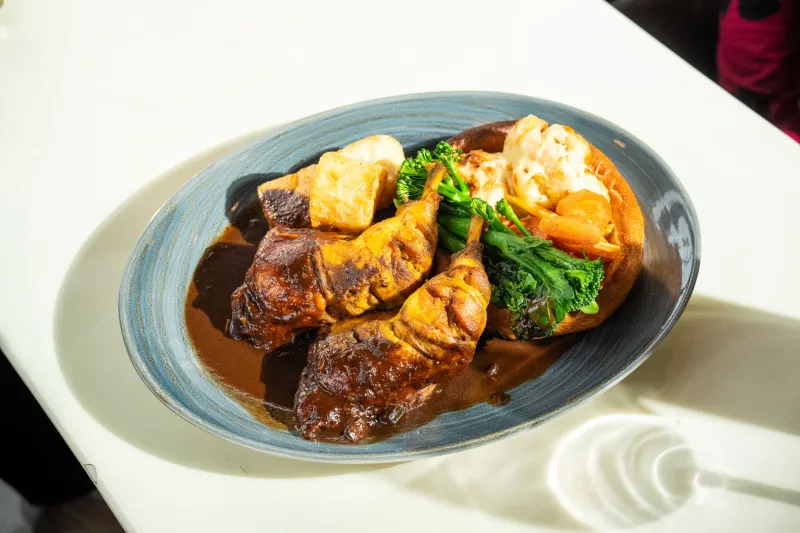
There is a moment, somewhere between the queue and the meat counter, when the British Sunday carvery stops being lunch and becomes a competitive sport. The plate is the arena. The ladle is the law. And somewhere near the back, a Yorkshire pudding is quietly judging you.
In 2026, with the cost of everything doing its best impression of a bungee jump, the carvery remains gloriously defiant: a proper feed, a bit of theatre and enough beige food to make a nutritionist faint. But it only works if everyone follows the code.
The Meat-Counter Negotiation
The carver is not simply serving meat. They are the gatekeeper of Sunday. Treat them with respect, clear diction and absolutely no sudden movements near the crackling.
The amateur mistake is saying, ‘A bit of everything, please,’ then looking horrified when the plate arrives with a protein avalanche. Know your order before you reach the front. Beef, turkey, pork, gammon — pick a lane, or at least pick a leader. If you are having two meats, say so early. Do not wait until the beef is halfway to your plate and then whisper ‘actually’ like a nervous assassin.
There is also the slice-size dance. You want enough, not so much that the carver sighs into the gravy. A good carvery gives you a decent portion and a sliver of something crispy. A great carvery gives you crackling that shatters like a dry autumn leaf. A bad carvery gives you meat that has been kept warm since the previous Sunday and expects you to be grateful.
Yorkshire Pudding Jurisprudence
This is where carvery peace collapses. The Yorkshire pudding is not a side. It is a constitutional right, an edible crown and, in many families, a source of genuine legal dispute.
The first rule is simple: take what you can reasonably defend. If the puddings are the size of dinner plates, one is a statement. If they are the size of a child’s fist, two is fair. Six is not ‘a bit of everything’; six is a cry for help.
There is also the batter geography to consider. A proper Yorkshire should have height, crunch and a soft well in the middle. That well is not a swimming pool for gravy. It is a sacred basin. Yes, gravy belongs in there, but only after you have secured the structural integrity of the plate. Nobody wants a Yorkshire pudding that collapses into a soggy pancake before you have reached the peas.
And if the carvery runs out of Yorkshires? Remain calm. Complain quietly. Do not make a scene by the roast potatoes. That is how legends are banned from Toby Carvery.
Gravy: A Doctrine, Not a Condiment
Gravy at a carvery is not poured. It is negotiated. The first pass is reconnaissance: a modest ribbon over the meat, a small tributary towards the stuffing. The second pass is commitment. The third pass is a cry for help.
The ideal gravy-to-everything-else ratio is a deeply personal thing, but there are limits. Gravy should enhance, not drown. If your carrots are doing breaststroke, you have gone too far. If the plate looks like a brown lake with a small island of beef, seek assistance.
Also, never block the gravy station while holding a conversation about your nephew’s swimming gala. Somebody behind you is holding a plate of dry turkey and losing the will to live.
The Gravy-to-Veg Ratio
Carvery veg is a beautiful lie. It is there to make you feel balanced, but it is also there to take up space you might later regret wasting. The trick is to build in layers: meat at the back, Yorkshire on the flank, potatoes down the middle, veg wherever it fits. Cauliflower cheese is not a vegetable; it is a luxury. Swede and carrot mash is not a side; it is a warm orange hug.
Do not build a tower. A tower is how you end up with gravy in your shoe and a pea in your handbag. Create a dam. Respect the plate’s architecture. Leave a small moat for emergencies.
The Seconds Protocol
Going back for seconds is one of Britain’s great unspoken freedoms. But there are rules. Wait until the first wave of diners has settled. Do not sprint. Do not take the last roast potato if an elderly person is within ten metres. And never, under any circumstances, announce, ‘I’m just going to see what’s left’ in a tone that suggests you have already mapped the remaining pigs in blankets.
If you do go back, keep it modest. A second carvery is a victory lap, not a fresh start. One slice, one potato, a polite spoon of gravy. You are an adult. Act like it, at least until the apple crumble arrives.
The Cheekie Monkey’s 2026 Carvery Scorecard
Fancy yourself as a carvery critic? Score your local out of ten in each category. Total it out of 100 and prepare to become insufferable at family lunches.
| Category | What to look for | Score |
|---|---|---|
| Meat | Tender, hot, properly carved, not sad and grey | /10 |
| Yorkshire pudding | Height, crunch, structural integrity | /10 |
| Roast potatoes | Crispy outside, fluffy inside, not bulletproof | /10 |
| Gravy | Flavour, thickness, no skin forming on top | /10 |
| Veg | Colour, variety, not boiled into oblivion | /10 |
| Stuffing | Sage-scented joy, not dry sawdust | /10 |
| Queue management | Orderly, not a scrum near the custard | /10 |
| Atmosphere | Cosy, bustling, only mild family tension | /10 |
| Value for money | Full plate, fair price, no hidden spud tax | /10 |
| Seconds tolerance | Staff look pleasantly surprised rather than murderous | /10 |
Anything over 75 is Sunday royalty. Anything under 40 means you are legally allowed to suggest a different pub next week. Anything around 50? Fine, but you will spend the drive home discussing the gravy.
Why the Carvery Still Wins
Because it is not really about the food. It is about the ritual: the queue, the ladle, the gentle panic over Yorkshire rationing, the family argument about who had the last bit of crackling. It is a Sunday plate-off with no winners, only people in slightly looser trousers.
The carvery is gloriously, unapologetically British. It is beige, it is generous, and it asks only that you respect the gravy. In 2026, that feels like a bargain.