Six O’Clock Tat Treasures: A Cheekie Rummage Through the Great British Car Boot Sale
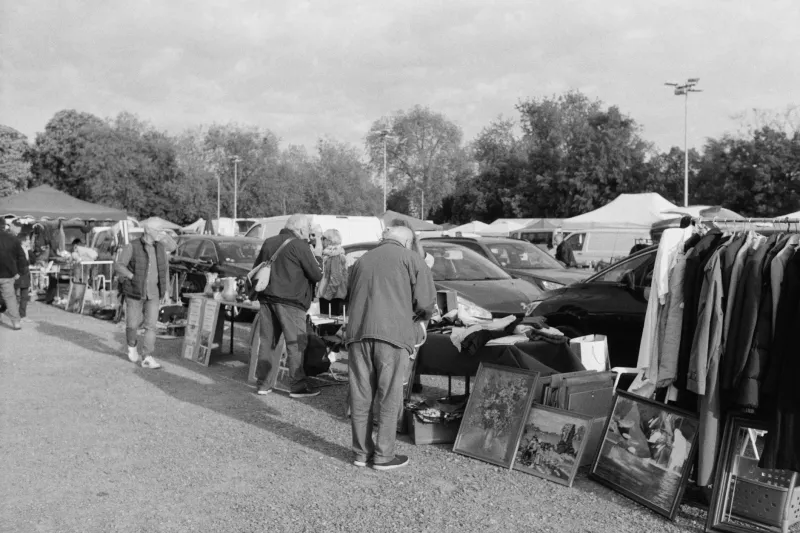
Car-boot sales are not shopping. Shopping is a civilised business of lists, lighting and someone asking if you need help. A car boot is a dawn raid on other people’s spare rooms, held in a damp field, soundtracked by a man selling extension leads and the distant clatter of a pasty van. And honestly, we wouldn’t have it any other way.
In 2026, with new stuff priced like it’s been blessed by a celebrity chef, the humble boot sale has become Britain’s most honest leisure activity. You pay a couple of quid to park, you wander, you haggle, you come home with a lamp, a Leonard Cohen LP and a bag of unidentified cables. It is retail, theatre and mild cardio all at once.
The 6am Dress Code: Thermos, Cash and a Suspiciously Upbeat Attitude
The first rule of a successful rummage is to dress for a field in whatever weather the sky has threatened. Layers, sturdy shoes, a coat with pockets big enough for a screwdriver and a surprise mug. Bring cash — not because stallholders are dodgy, but because a fiver in hand speaks louder than a banking app that needs a signal and a facial recognition dance. Bring a flask. Bring a bag for life that has seen things. Bring patience for the person who blocks the whole aisle to inspect a broken strimmer as if it were the Crown Jewels.
Arrive early if you want the good stuff, but not so early that you’re helping strangers unload their cars. There’s a line between keen and feral. The sweet spot is just after the first wave of sellers has laid out their wares and before the dealers have done their laps. You’ll know you’ve timed it right when you hear someone say, ‘I’m not really set up yet,’ while somehow having priced every item.
The Sacred Art of the Opening Sweep
Do a fast lap first. This is not the time to fall in love with a three-legged chair. The opening sweep is reconnaissance: note where the tools are, where the vinyl is, where the suspiciously clean handbags are. Resist the urge to buy a massive mirror in the first ten minutes unless you enjoy carrying a wardrobe-sized reflection around a muddy field while pretending it’s fine.
Then go back. The second lap is where the real business happens. Look properly. Pick things up. Check the bottom. Ask yourself the three boot-sale questions: Is this actually useful? Is it broken in a way I can live with? Will it fit in the car, or will I be driving home with a hatstand on my lap like a very niche rally driver?
Haggling Without Turning Into a Villain
Haggling is a delicate British pantomime. You must express interest without appearing desperate, and the seller must pretend the item is priceless while clearly wanting it gone before the rain starts. The magic words are not ‘That’s a rip-off.’ They are ‘Would you take…?’ Said with a smile, a reasonable offer and a willingness to walk away, this can shave pounds off almost anything.
Etiquette matters. Don’t haggle aggressively over a 50p paperback unless you enjoy being a cautionary tale. If you’re buying several things, bundle them: ‘Would you do the lot for six quid?’ is a lovely sentence. If the seller says no, accept it. You may counter once, politely. You may not sigh like a disappointed Victorian ghost. And if you’ve agreed a price, pay it. The car-boot gods are watching.
Treasure, Tat and the Fine Line Between Them
The best finds rarely announce themselves. They sit in a cardboard box between a broken toaster and a DVD of a film nobody remembers. Look for weight, maker’s marks, original boxes, complete sets and things that feel better made than they look. A heavy pan, a solid tool, a signed book, a board game with all its pieces — these are quiet victories.
Tat, meanwhile, has a confidence all of its own. It is the novelty mug with a slogan that was never funny. It is the exercise machine shaped like a medieval punishment. It is the ornamental frog that has clearly seen too much. The trick is not to sneer. One person’s tat is another person’s treasure, and anyway, you’re the one standing in a field at 7am in a waterproof hat. Humility is part of the fun.
Check condition with a ruthless eye. Ceramics: look for cracks. Electricals: assume they need a plug, a fuse and a small prayer. Vinyl: check for scratches and warping. Furniture: smell it. Actually smell it. Damp chipboard is a lifestyle choice you do not need. If something is missing a crucial part, decide whether you’re buying a project or a problem. There is a difference.
The Mystery Carrier Bag: Britain’s Cheapest Lottery
And then there is the sealed carrier bag. A pound, maybe two, and inside: who knows? It might contain a vintage brooch, a set of coasters and a small spoon from Scarborough. More likely, it contains three phone chargers for phones that no longer exist, a single oven glove and a leaflet for a gym that closed in mysterious circumstances. That is the deal. You are not buying contents; you are buying possibility.
A few rules keep the mystery bag magical. Ask before you open it — some sellers are happy, some prefer you buy blind. Set a strict budget. Do not buy twelve mystery bags because ‘they might have jewellery in’. And when you get home, give yourself permission to bin the mysteries that are just rubbish with a story. The bag is the lottery; the bin is the reality check.
A Cheekie Survival Kit for 2026
Take cash, a flask, a sturdy bag, hand sanitiser and a sense of humour. Wear layers. Leave the dog at home unless the dog genuinely enjoys being admired by strangers. Park so you can escape without reversing into a stall selling garden gnomes. And remember: the point isn’t to find a bargain, although that’s lovely. The point is the rummage — the low-level thrill of not knowing what’s in the next box.
Car-boot sales are Britain at its most gloriously uncurated: hopeful, slightly damp and full of things someone else has decided not to keep. Go early. Haggle kindly. Check the bottom of the bag. And if you come home with a mystery carrier bag and a lamp you didn’t need, congratulations. You’ve done it right.